
“Every teacher needs to improve, not because they are not good enough, but because they can be even better.” Dylan Wiliam’s quote is now ubiquitous in teacher development circles and rightly so. The underlying sentiment is hard to argue with. Most teachers want to improve. Most school leaders want to support that improvement. Yet despite good intentions on all sides, we often find ourselves frustrated by the slow pace of change. Why?

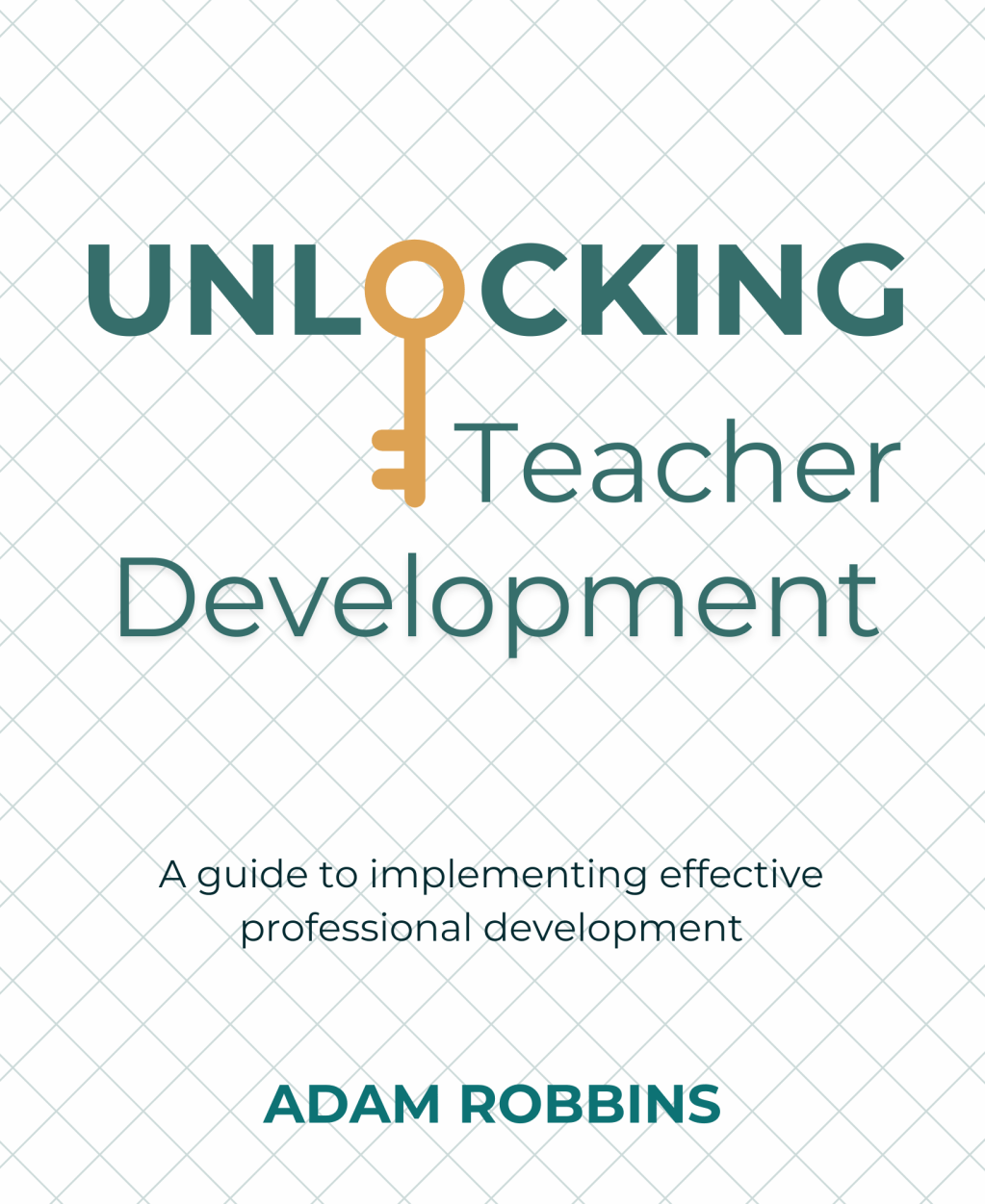
That’s the question Chapter 2 of Unlocking Teacher Development tries to unpick. It outlines three deep-rooted reasons why teaching is so hard to improve, none of which are about lack of effort or professionalism. Instead, they relate to the nature of learning, the challenge of defining excellence, and the invisible architecture of habit.
Understanding these barriers doesn’t make them go away. But it does help us design development that stands a better chance of working, and sticking.
1. Teaching is Hard to Learn Because Working Memory is Limited
If we asked teachers to build a rocket from scratch, we’d expect them to need time, scaffolding and plenty of support. Yet teaching itself is a complex, high-stakes task, and we often expect people to just “pick it up” during CPD sessions or one-off briefings. The reality is that the brain is not built to process complex new information quickly. Working memory is painfully limited. Attention is fragile. Learning requires repetition, spacing, feedback and clarity.
So, when we design teacher development, we need to think like cognitive scientists, not motivational speakers.
What helps?
- Chunking: Break new content into small, digestible steps. This isn’t about dumbing down, it’s about respecting the way people learn.
- Dual coding and worked examples: Use visuals, scenarios and modelling to make abstract ideas concrete. Let teachers see what success looks like.
- Reducing distractions: Don’t assume people are learning if they’re present. Without attention, nothing gets into working memory.
There’s a reason people forget 90% of what’s said in a training session. Often, we’ve designed the input around what we want to say, not what others are able to process.
2. We Struggle to Agree on What ‘Great Teaching’ Looks Like
Another problem: even if teachers want to get better, there is rarely a clear destination in view. Different schools, even different leaders in the same school have competing definitions of effective teaching. Some adopt rigid frameworks that leave no room for professional judgement. Others avoid clarity entirely and end up with inconsistency, drift and incoherence.
Both approaches get in the way of genuine improvement.
So, what works better?
- Build a shared model of teaching, but focus it around purpose rather than fixed routines. Everyone needs clarity on what good teaching aims to achieve — not just what it looks like at surface level.
- Use consistent lesson phases: Phases like retrieval, explanation, checking for understanding, independent practice, feedback, but let departments shape how those look in their context.
- Stay off the extremes of the tight–loose continuum. Too tight, and teachers lose agency. Too loose, and the culture loses focus. The art is in getting that balance right.
Development needs a map, and the map needs a shared language. Without one, we run the risk of inefficient communication and messy feedback.
3. Habits Rule the Classroom and They’re Not Easily Changed
The final barrier is arguably the most stubborn: habit. Teaching is relentless, repetitive and emotionally charged – exactly the kind of environment in which automatic behaviours form. Teachers don’t just choose what they do every lesson. Much of it is habitual, shaped by repetition and context rather than conscious decision-making.
This has two implications. First, bad habits persist, not because of laziness, but because they’re invisible. Second, new techniques won’t take hold unless we design environments that support repetition and cue new routines.
Practical strategies?
- Make cues visible: Want teachers to cold call more? Embed that into planning templates, lesson feedback or departmental discussions.
- Habit stack: Link new routines to existing ones. For example, if a teacher already does a starter task, adjust that moment to enhance retrieval practice.
- Support with feedback that targets the environment, not just the individual. Too often we tell teachers to “try this” without helping them reframe the moment or cue where the habit needs to happen.
Also worth remembering: habits are resistant to feedback not because teachers are stubborn, but because the habit operates below conscious awareness. If we want to shift practice, we need to make the unconscious visible.
So Where Do We Go From Here?
If improving teaching feels hard, that’s because it is. But it isn’t hopeless. Chapter 2 of Unlocking Teacher Development argues that progress lies not in quick fixes, but in thoughtful design. If we:
- Respect cognitive limits and teach less but better
- Build shared models with clear language and flexible structures
- Understand how cues, routines, and repetition drive habit formation
…then we can make teacher development not only more effective, but more sustainable.
There are no silver bullets. But there are better questions to ask, and better principles to follow. And when we get those right, we begin to build the kind of culture where improvement is no longer an uphill battle, it’s just the way we do things.
If you find these kinds of issues interesting then you may want to delve deeper by reading Unlocking Teacher Development, exclusively on Amazon.
I’m also running a free webinar on Unlocking Experienced Teachers on 25/9/25 at 4pm tickets here



 Adam Robbins Education
Leave a comment